
Use up and down arrows to select available result. Press enter to go to selected search result. Touch devices users can use touch and swipe gestures.

Balances are extremely important for laboratory use. High Precision Measuring for laboratory applications requiring 0.1 milligram readability will need a reliable weighing balance and we have the solution you're looking for. Our selection of balances is perfect for just about any application from a pharmaceutical laboratory to a university science class. From a high precision manufacturing application to basic quality control office, we can provide you with the right item for your laboratory weighing needs. We feature top manufacturers of balances like A&D, Ohaus, Sartorius, Rice Lake, and Adam Equipment. Contact our sales team today for product recommendations and competitive prices. Many balances feature internal calibration, easy to read displays, and draft shields. Having trouble deciding which balance, contact one of our scale experts who can provide insight and product overviews. Ohaus balances offer award-winning performance and value while A&D balances are easy to use and super reliable.
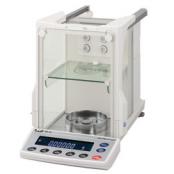 Micro BalancesThese devices are typically used to weigh very small samples to a resolution of five-to-seven decimal places. Ultra sensitive micro and semi-micro models come with a weighing chamber/breeze break to achieve the utmost in precision and performance.
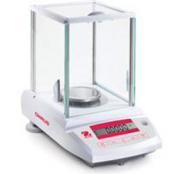 Balances - Analytical Analytical balances are ideal for weighing to the highest degree of precision and accuracy. These devices are used with a weighing chamber/breeze break, and measure from four-to-five decimal places.
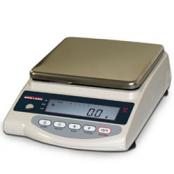 Balances - PrecisionPrecision/toploader balances are well suited for low-resolution samples that require less precision. Typical resolution is from one-to-three decimal places, and lower capacity models will frequently include a breeze break.
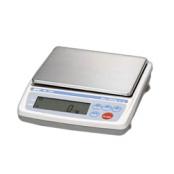 Balances - NTEP Legal for TradePrecision NTEP legal for trade balances are well suited for weighing items like jewelry that require certified weighing precision. Typical resolution is from one to two decimal places.
 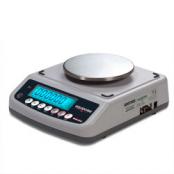 Balances - CompactFor low-resolution weighing in grams, compact/portable balances offer the convenience of small size and mobility. These models are not typically intended for high-volume usage.
 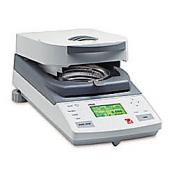 Balances - MoistureFor more in depth composition analysis, we have several types of balances with a moisture analysis feature. Through drying, these devices measure the moisture content of a given sample.
We are often asked what lab balance should I buy or what brand of balance should I purchase? In our experience it's best to contact a few reputable scale distributors (like us) and/or manufacturers and tell them what you plan to do with the weighing balance and what your expectations are regarding things like features, capacity, readability, price, etc... At Central Carolina Scale we provide customers with our reviews on gram balances and thoughts on each balance and each brand's reputation. And we offer the top brands of laboratory scales available today from names like Ohaus, A&D, Sartorius and Adam Equipment. We actually have quite a few choices available with various capacity options and decimal places to choose from.
Every so often we are asked who makes the best weighing balance for laboratories and honestly it's difficult to say for certain. However, we can tell you that our A&D, Mettler Toledo, Precisa, Adam Equipment, Ohaus, and Vibra balances available from Central Carolina Scale are some of the finest weighing machines that you're going to find. The odds are if you're looking for a grams or milligrams weighing solution for your laboratory, we can help you out with one of these outstanding scale manufacturers.